

Summary
ChatGPT Shopping refers to the use of conversational AI to help users discover, compare, and decide on products directly within an AI interface rather than through traditional search result pages. In 2025, this shift matters because ecommerce SEO is no longer driven only by blue links and keyword rankings, but by how well product data, brand authority, and contextual relevance are understood and surfaced by AI systems. As ChatGPT increasingly influences shopping decisions, ecommerce brands must rethink SEO optimization to remain visible, trusted, and competitive in AI-driven shopping experiences.
What ChatGPT Shopping Is and Why It Exists
What Is ChatGPT Shopping?
ChatGPT Shopping is the evolution of conversational commerce, where shoppers ask natural language questions such as “What’s the best noise-canceling headphones under $300?” and receive curated, context-aware product recommendations. Instead of directing users to a list of websites, the AI synthesizes information from across the web, ecommerce platforms, and structured data sources to provide direct answers.
At the center of this shift is ChatGPT, which has moved from a general information assistant to an increasingly commerce-aware discovery layer. For ecommerce SEO, this means rankings are no longer just page-based; they are entity-based, trust-based, and intent-driven.
Why ChatGPT Shopping Exists
Traditional ecommerce search has friction. Users must open multiple tabs, scan reviews, compare specs, and interpret marketing language. AI shopping exists to reduce that friction by doing the comparison work upfront. This aligns with broader trends in zero-click search, where users expect answers immediately without navigating multiple pages.
For search engines and AI platforms, this approach improves user satisfaction. For brands, it introduces a new visibility challenge: being the product or brand the AI chooses to mention.
How It Works in Practice
ChatGPT Shopping works by combining:
- Semantic understanding of user intent
- Access to structured product data and reviews
- Entity recognition for brands, categories, and attributes
- Relevance and trust signals derived from the web
Instead of asking “Which page ranks #1?”, the system asks “Which products best answer this user’s need?”
How ChatGPT Is Changing Ecommerce SEO Fundamentals
From Keywords to Contextual Relevance
Classic ecommerce SEO focused on optimizing category pages and product listings for specific keywords. In AI-driven shopping, context matters more than exact phrasing. ChatGPT evaluates whether a product aligns with user intent, budget, use case, and quality expectations.
This means ecommerce SEO now depends on:
- Clear product descriptions written for humans
- Consistent attribute data (price, size, materials, compatibility)
- Content that explains use cases, not just features
Entity-Based Visibility Over Page Rankings
AI shopping systems rely heavily on entities: brands, products, and categories as recognized objects. If your brand is poorly defined or inconsistently represented across the web, ChatGPT is less likely to surface it confidently.
Platforms like Google have already moved in this direction with entity-based search. ChatGPT accelerates this shift by prioritizing brands that demonstrate clarity, authority, and consistency.
Trust Signals Matter More Than Ever
ChatGPT does not simply list products; it recommends them. That recommendation is influenced by:
- Reviews and sentiment
- Brand mentions across authoritative sites
- Transparent policies (returns, warranties, support)
Ecommerce SEO is now inseparable from brand trust and reputation management.
Step-by-Step: How Ecommerce SEO Must Adapt for ChatGPT Shopping
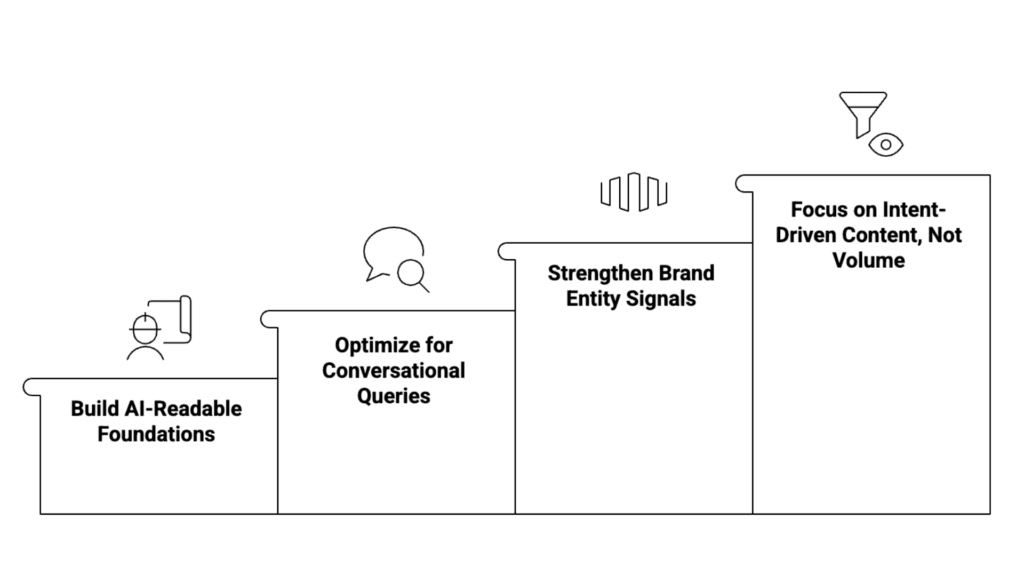
Step 1: Build AI-Readable Product Foundations
Every product must be understandable to machines. This starts with structured data such as Product, Offer, and Review schema. Clear labeling of attributes allows AI systems to compare products accurately.
Unstructured or vague descriptions limit visibility because the AI cannot confidently recommend what it does not understand.
Step 2: Optimize for Conversational Queries
ChatGPT Shopping queries are longer and more specific than traditional keywords. Ecommerce content must answer questions like:
- Who is this product for?
- What problem does it solve?
- How does it compare to alternatives?
FAQ sections, comparison content, and buyer guides become SEO assets rather than optional extras.
Step 3: Strengthen Brand Entity Signals
Your brand must exist as a coherent entity across the web. This includes:
- Consistent brand naming
- Unified messaging across marketplaces and owned channels
- Clear “About” and trust pages
Marketplaces like Amazon already structure product data well, which is why their listings are frequently referenced by AI systems.
Step 4: Focus on Intent-Driven Content, Not Volume
Publishing hundreds of thin product pages no longer helps. ChatGPT favors depth and clarity. One strong category guide that explains buying criteria can outperform dozens of shallow pages.
Benefits and Real-World Applications of ChatGPT-Driven Ecommerce SEO
For Startups and New Brands
ChatGPT Shopping can level the playing field. If a startup has clear positioning, strong reviews, and well-structured content, it can be recommended alongside established brands even without massive backlink profiles.
For Enterprise Ecommerce Brands
Large catalogs benefit from AI when structured properly. AI can surface long-tail products that never ranked well in traditional search but perfectly match niche queries.
For Niche and Specialized Stores
Specialty retailers gain disproportionate value. ChatGPT excels at matching specific needs, such as professional equipment or hobbyist tools, where expert explanations matter more than brand recognition.
Common Challenges and Mistakes in ChatGPT Ecommerce SEO
Over-Optimizing for Old SEO Models
Many brands still focus on traditional search rankings instead of optimizing for AI. Keyword-stuffed descriptions and templated content reduce clarity and trust, making products less likely to be recommended by ChatGPT.
Inconsistent Product Data Across Channels
If your product specs differ between your website, marketplaces, and third-party reviews, AI systems may lose confidence in your products—or exclude them entirely from recommendations.
Ignoring Brand Authority Signals
ChatGPT favors brands with context and credibility. Without authoritative mentions, reviews, or third-party validation, even well-optimized product pages may remain invisible to AI shoppers.
Cost, Time, and Effort: What to Expect
Adapting ecommerce SEO for ChatGPT Shopping is not a quick fix. Brands should expect:
- Initial restructuring of product data and content
- Investment in editorial-quality buying guides and comparisons
- Ongoing effort to maintain consistency across platforms
The payoff is cumulative. Once an AI system recognizes a brand as reliable, visibility compounds rather than resets with every algorithm update.
ChatGPT Shopping vs Traditional Ecommerce SEO
Key Differences
- Traditional ecommerce SEO focuses on page rankings, backlinks, and keyword placement.
- ChatGPT Shopping focuses on product and brand relevance, trust, and usefulness—AI decides what to recommend based on these signals rather than just web page authority.
Why Traditional SEO Still Matters
- Classic SEO is still important for helping search engines discover your content, crawl your site, and build authority.
- Today, it serves as a foundation, but not the final step for visibility in AI-driven shopping.
When AI-Driven Shopping Dominates
- For comparison-heavy, research-intensive, or high-value purchases, ChatGPT Shopping can influence buying decisions before users even visit your website.
- Brands that optimize for AI recommendations are more likely to appear in these direct product suggestions.
Future Trends and Best Practices for 2025 and Beyond
AI shopping will continue to integrate:
- Real-time pricing and availability
- Personalized recommendations based on context
- Deeper integration with ecommerce platforms and marketplaces
Best practices include maintaining clean data, publishing genuinely helpful content, and treating SEO as an ecosystem rather than a checklist.
FAQs
What is ChatGPT Shopping?
ChatGPT Shopping is an AI-driven way for users to discover and compare products through conversational queries rather than traditional search results.
How does ChatGPT impact ecommerce SEO?
It shifts focus from keyword rankings to product relevance, structured data, and brand trust signals.
Do keywords still matter for ecommerce SEO?
Yes, but they support context rather than drive visibility alone. Intent and clarity matter more.
Can small ecommerce sites compete in ChatGPT Shopping?
Yes, if they provide clear product data, strong reviews, and useful explanatory content.
Is ChatGPT replacing search engines for shopping?
It complements them by influencing decisions earlier, especially for research-heavy purchases.