

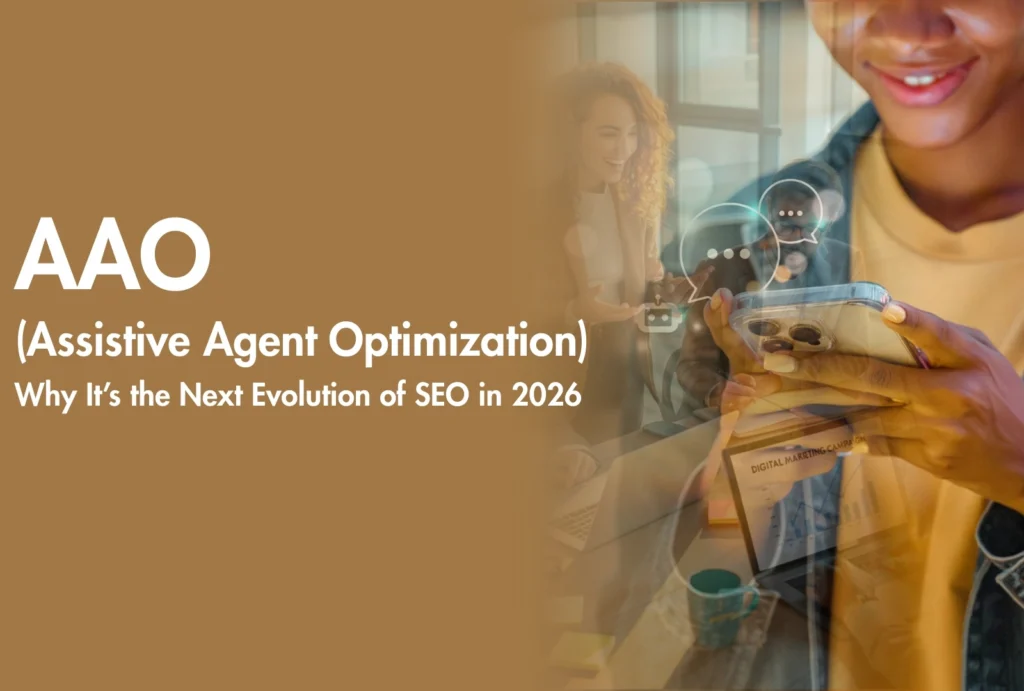
Search is changing again. Traditional engine optimization seo is no longer only about ranking blue links. In 2026, brands also need to be understood, selected, and cited by AI-powered assistants, search experiences, and autonomous recommendation systems. That shift is why aao assistive agent optimization is emerging as the next evolution of SEO.
Put simply, AAO expands classic SEO for a world where users increasingly ask AI systems for answers instead of clicking through multiple search results. This does not replace SEO. It builds on it. The same fundamentals that support visibility in search still matter, but content now also needs to be structured for extraction, summarization, and recommendation by intelligent systems.
AAO in 2026 (Quick Summary)
- AAO = SEO + AI extractability
- Focuses on answer-first content
- Improves AI Overview visibility
- Supports zero-click search
- Enhances content clarity & structure
What Is AAO (Assistive Agent Optimization)?
AAO, or assistive agent optimization, is the practice of optimizing content so AI assistants, search agents, and machine-generated summaries can understand, retrieve, and present it accurately. It combines traditional SEO principles with content structuring, clarity, and entity-level relevance to improve visibility in AI-driven search environments.
At a high level, what is aao really asking? It is asking how brands should adapt as search behavior shifts from “find me links” to “give me the best answer.” In that environment, content must do more than rank. It must be easy for machines to interpret, compare, and cite.
AAO focuses on making content:
- Easy to parse
- Clear in purpose and meaning
- Structured around direct answers
- Supported by strong topical relevance
- Useful in both human reading and machine summarization
This is why aao assistive agent optimization is becoming more important in 2026. As AI systems mediate more discovery journeys, visibility depends not only on rankings but also on extractability.
Why Is AAO the Next Evolution of SEO in 2026?
AAO is the next evolution of SEO in 2026 because search engines and AI systems increasingly deliver direct answers, summaries, and recommendations without requiring users to visit multiple pages. Brands now need content that can rank traditionally while also being selected for AI Overviews, snippets, and assistive responses.
The shift is not theoretical. Users are getting more comfortable with conversational search, AI-generated answers, and task-based digital assistance. This changes how content earns attention. Pages that are vague, overly padded, or poorly structured may still exist in the index, but they are less likely to be surfaced in concise AI outputs.
Traditional SEO still matters because ranking, authority, crawlability, and relevance remain foundational. But AAO introduces an additional layer: content must also work well when an AI system needs to:
- Identify the main answer quickly
- Extract supporting context
- Compare options or interpretations
- Present a reliable summary
In other words, strong SEO helps content get discovered, while AAO helps it get used.
How Is AAO Different From Traditional SEO?
Traditional SEO focuses primarily on improving visibility in search engine results pages, while assistive agent optimization focuses on improving visibility inside AI-generated answers, summaries, and recommendations. The two disciplines overlap, but AAO prioritizes extractability and machine comprehension more directly.
Here is the practical difference:
| Factor | Traditional SEO | AAO |
| Focus | Rankings | AI extraction |
| Output | Links | Answers |
| Structure | Keyword-driven | Answer-driven |
| Goal | Clicks | Visibility + usage |
The goal is not to abandon SEO best practices. The goal is to make them more compatible with AI-led discovery.
Why Do AI Systems Need Different Content Signals?
AI systems need different content signals because they do not only rank pages; they interpret, condense, and generate responses from content. That means structure, clarity, and explicit meaning become more important than they were in a purely link-based search environment.
A traditional search engine might reward a page for relevance and authority even if the answer is buried halfway down the article. An AI assistant, however, is more likely to favor content that surfaces the answer early, explains it clearly, and supports it with organized detail.
This is where AAO creates a meaningful advantage. Content optimized for assistive systems is easier to:
- Summarize
- Compare
- quote
- Reuse in zero-click environments
- integrate into conversational search responses
That does not mean content should become robotic. It means content should become more precise.
What Are the Core Elements of AAO (Assistive Agent Optimization)?
The core elements of AAO include clear answer-first writing, strong topical structure, schema-aware organization, contextual depth, and machine-readable formatting. Together, these elements help content perform across both human search behavior and AI-driven retrieval systems.
1. Answer-First Content Structure
The most important point should appear early. Many sections benefit from a concise definition or direct answer directly under the heading. This improves readability for users and extractability for AI systems.
2. Clear Heading Logic
Headings should reflect real questions and decision points. Query-style headings often perform well because they map naturally to how people search and how AI systems interpret intent.
3. Strong Semantic Relevance
Pages should cover the topic comprehensively without drifting. Related concepts, supporting terms, examples, and contrasts help build contextual understanding.
4. Structured Formatting
Lists, short paragraphs, comparison blocks, and step-by-step explanations make content easier to scan, summarize, and reuse. This improves both user experience and AI parsing.
5. Demonstrated Practical Value
Content should not only define concepts. It should explain implications, tradeoffs, and use cases. This strengthens usefulness and perceived expertise.
How Does AAO Support Performance Enhancement?
AAO supports performance enhancement by improving how efficiently content is understood, selected, and surfaced by search engines and AI systems. Better structure can increase visibility, snippet eligibility, summarization potential, and engagement quality, especially in search journeys where users want quick, reliable answers.
The phrase performance enhancement matters here because optimization is no longer limited to page rank alone. In 2026, performance includes:
- How often content is cited in AI summaries
- How easily a system can extract key points
- How clearly the content answers intent
- How well a page supports both zero-click and click-through journeys
This broader view of performance rewards content that is useful in multiple environments. A page may attract fewer casual clicks yet create more qualified visits if it is consistently surfaced as a trusted answer source.
What Role Does a SEO Optimizer AI Agent Play in AAO?
A seo optimizer ai agent can support AAO by identifying structural gaps, improving clarity, mapping keyword intent, and helping format content for both search engines and AI extraction. However, the agent is most effective when guided by human editorial judgment and strong subject understanding.
A seo optimizer ai agent can help with:
- Query clustering
- heading refinement
- answer-first summaries
- semantic expansion
- internal linking suggestions
- FAQ generation
- readability improvements
But relying on automation alone creates risk. AI can help structure content, yet human review is still necessary to protect nuance, accuracy, originality, and strategic positioning. The strongest AAO workflows combine machine efficiency with editorial oversight.
How Should Content Be Written for Both Humans and AI Systems?
Content written for both humans and AI systems should be clear, direct, well-structured, and useful without becoming flat or mechanical. The best hybrid content answers the main question quickly, then expands with context, examples, and logical progression.
A practical writing model looks like this:
- Use a heading that reflects a genuine query
- Give a succinct, 40–60 word response.
- Expand with explanation, examples, or comparisons
- Summarize the takeaway before moving on
This structure helps the article function in multiple ways. A reader can skim it. A search engine can understand it. An AI system can extract it. That is the core advantage of assistive agent optimization.
What Makes AAO Important for Zero-Click Search?
AAO is important for zero-click search because many users now get the information they need directly from summaries, snippets, and AI-generated answers. In those environments, content visibility depends less on being clicked first and more on being selected as the most usable source.
Zero-click visibility is often misunderstood as a loss. In reality, it can also be a branding and authority opportunity. When a page consistently supplies strong definitions, comparisons, and structured explanations, it increases the chance that its insights shape the answer experience.
To compete in zero-click environments, content should:
- Put definitions near the top
- Use snippet-friendly paragraph lengths
- Break down processes step by step
- include FAQ-style subtopics
- minimize vague or delayed explanations
This is one reason aao assistive agent optimization matters now more than ever.
How Can Brands Start Implementing AAO in 2026?
Brands can start implementing AAO in 2026 by updating existing SEO content with answer-first formatting, stronger heading structures, and clearer topical organization. The process usually begins with improving content architecture rather than rewriting every article from scratch.
Here is a practical approach:
Audit Existing High-Intent Content
Review pages that already perform well or target important queries. These pages often offer the fastest opportunity for AAO gains.
Add Direct Answers Under Key Headings
Where a section addresses a question, include a concise answer immediately below the heading. Then expand with supporting detail.
Improve Section Independence
Each section should make sense on its own. This increases the chance that an AI system can extract it cleanly.
Strengthen Topical Relationships
Add missing clarifications, comparisons, and related supporting concepts where needed. This improves semantic completeness without changing the original argument.
Refine Formatting for Extraction
Use short paragraphs, bullet lists, and logical sequencing where appropriate. These formats help both readers and machine systems.
Does AAO Replace SEO?
No, AAO does not replace SEO. It extends SEO for a search environment increasingly shaped by AI assistants, summaries, and conversational interfaces. Traditional SEO remains essential because authority, relevance, crawlability, and user intent are still foundational to online visibility.
The relationship is better understood this way:
- SEO helps content become discoverable
- AAO helps content become interpretable and reusable
So the future is not SEO versus AAO. It is SEO plus AAO. Brands that combine both are better positioned to earn visibility across classic search results and AI-driven answer environments.
What Are the Strategic Benefits of Assistive Agent Optimization?
Assistive agent optimization gives brands a strategic advantage by increasing visibility across more discovery surfaces, not just traditional rankings. It helps content perform in search results, snippets, AI summaries, and emerging assistive interfaces where users expect faster and more direct answers.
Key benefits include:
- Broader search visibility
- Better compatibility with AI Overviews
- Improved snippet potential
- Stronger content clarity
- More resilient organic strategy as search behavior changes
- Better alignment between user intent and content delivery
These benefits matter because search ecosystems are fragmenting. Users may search through browsers, voice interfaces, AI assistants, workplace copilots, or embedded search tools. AAO prepares content for that wider environment.
Conclusion: Why AAO Matters Now
AAO matters now because digital visibility increasingly depends on whether content can be understood, extracted, and trusted by AI-driven systems as well as traditional search engines. In 2026, the next stage of optimization is not just ranking pages. It is shaping answers.
For marketers, publishers, and brands, the implication is clear. Strong SEO (Search Engine Optimization) is still necessary, but it is no longer sufficient on its own. The next competitive edge comes from Assistive Agent Optimization (AAO): building content that ranks, informs, and translates cleanly into AI-mediated search experiences.
That is why what is aao is quickly becoming one of the more important strategic questions in digital marketing. It is not a passing label. It reflects a real change in how search works and how content earns visibility.
FAQs
What is AAO in SEO?
AAO in SEO refers to assistive agent optimization, which means optimizing content so AI assistants and AI-driven search systems can understand, extract, and present it effectively. It builds on traditional SEO by emphasizing clarity, structure, and direct-answer formatting for machine-readable visibility.
Is assistive agent optimization only for AI search engines?
No, assistive agent optimization is not only for AI search engines. It also improves content performance in traditional search by making pages clearer, better structured, and more aligned with user intent. In many cases, AAO strengthens both standard organic rankings and zero-click visibility.
How does a seo optimizer ai agent help with AAO?
A seo optimizer ai agent helps with AAO by analyzing content structure, identifying missing subtopics, refining headings, and improving answer-first formatting. It can speed up optimization work, but human review is still necessary to maintain quality, nuance, and strategic accuracy.
Why is AAO important in 2026?
AAO is important in 2026 because users increasingly interact with AI summaries, conversational search, and zero-click experiences instead of only browsing search result pages. Content that is optimized for both humans and assistive systems is more likely to stay visible as search behavior continues to evolve.